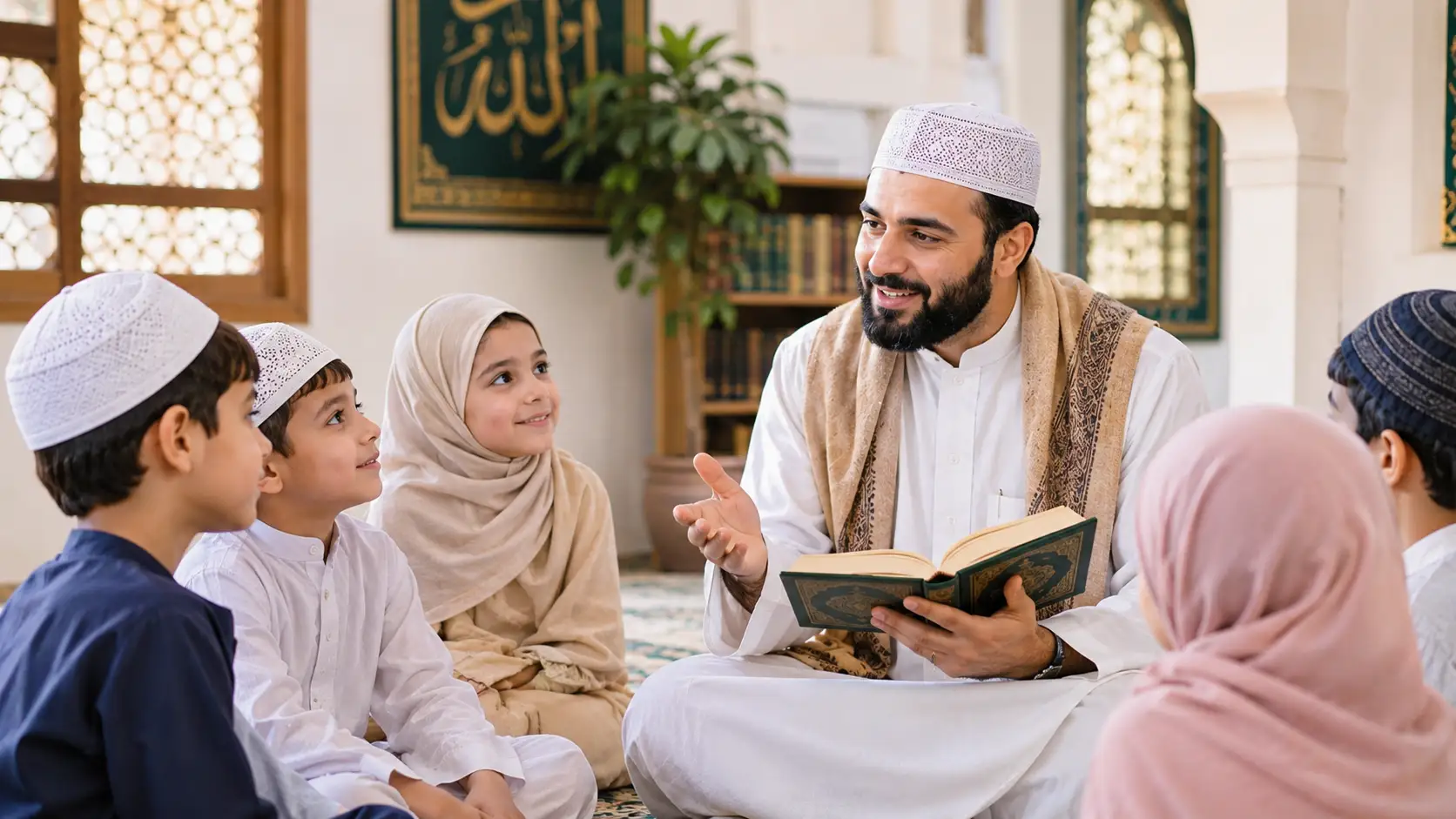
The Role of the Teacher in Islamic Education
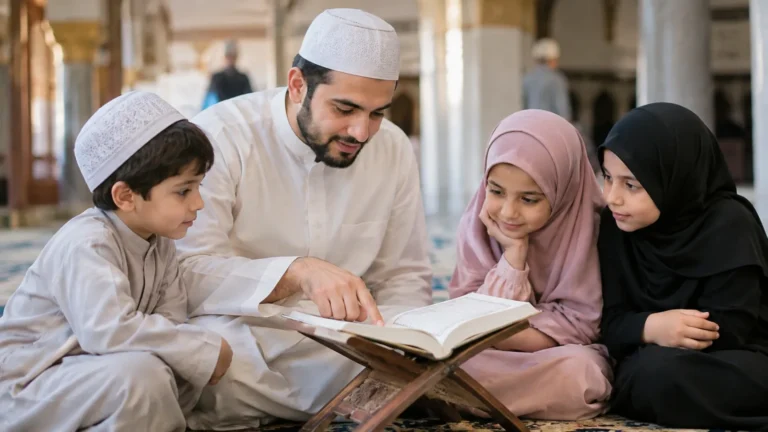
In Islam, a teacher holds a very special place. The teacher’s role in Islamic education goes far beyond the classroom. A teacher does not just share facts. A teacher shapes minds, builds character, and guides souls.
Allah says in the Quran: “Allah will raise those who have believed among you and those who were given knowledge, by degrees.” (Surah Al-Mujadila 58:11). This verse shows how highly Islam values knowledge and those who carry it.
The Prophet Muhammad (peace be upon him) said: “Verily, I was sent as a teacher.” (Sunan Ibn Majah, Hadith 229). That one sentence says everything. Teaching in Islam is a mission, not just a job. So what truly defines a Quran teacher’s responsibilities in Islam? And why does it matter so much?
The Status of Knowledge in Islam and Why It Matters
Islam places knowledge at the very center of human life. The first word revealed to the Prophet was “Iqra,” meaning Read.” That single command changed everything.
Allah says in Surah Az-Zumar 39:9: “Are those who know equal to those who do not know?” Clearly not. Knowledge in Islam is a duty on every Muslim.
The Prophet said: “Seeking knowledge is an obligation upon every Muslim.” (Sunan Ibn Majah, Hadith 224). He also said: “The best of you are those who learn the Quran and teach it.” (Sahih Al-Bukhari, Hadith 5027).
A Quran teacher carries this knowledge forward. Every lesson they give is an act of worship. Every student they guide is a deed that never stops giving.
The Teacher as an Heir to the Prophetic Mission
The Prophet Muhammad (peace be upon him) said: “The scholars are the inheritors of the prophets.” (Sunan Abu Dawud, Hadith 3641). This is not a small statement. It means every Islamic educator continues the same divine work the prophets carried out.
They do not just teach reading and writing. They pass down values, wisdom, and the light of faith.
Islamic teachers bridge revelation and the next generation. Without them, knowledge stops flowing. Without them, the prophetic mission goes unfinished.
How Islam Defines the Position and Responsibilities of a Teacher
Islam lays down clear duties for a Quran teacher. These come from the Quran, Hadith, and the writings of great Sunni scholars like Al-Ghazali.
Transmitting Knowledge with Sincerity
The teacher must share knowledge purely for the sake of Allah. Al-Ghazali warned in Ihya Ulum al-Din against teaching for money or fame alone. A teacher who seeks only worldly reward loses the true blessing of their work. Sincere Islamic education always starts with a clean, honest heart.
Understanding and Caring for Each Student
A good Quran teacher sees every student as an individual. Al-Ghazali said a teacher must show the same care a father shows his child. The Prophet said: “Make things easy and do not make them difficult.” (Sahih Al-Bukhari, Hadith 69). Students learn better when they feel safe, valued, and respected.
Teaching at the Right Level
The Prophet said: “We prophets have been commanded to speak to people according to their understanding.” (Abu Dawud, as reported by scholars of Usul). A teacher must never rush students. Giving complex ideas too early causes confusion and discouragement. Quran learning for beginners must always start simply and build gradually. Our Noorani Qaida course is built exactly for that purpose.
The Teacher as a Role Model in Character and Conduct
A Muslim teacher must live by what they teach. Al-Ghazali was very direct about this. If a teacher preaches honesty but acts otherwise, students notice immediately.
The Prophet said: “Each of you is a shepherd and each of you is responsible for his flock.” (Sahih Al-Bukhari, Hadith 893). A teacher is responsible for the moral direction of every student under their care. Character is caught, not just taught. An Islamic role model teacher shapes students through actions every single day, not only through words spoken inside a classroom.
How Teachers Shape the Moral and Spiritual Growth of Students
A Quran teacher does not only fill the mind. They shape the soul. The goal of Islamic education is to produce a person who is both knowledgeable and righteous in daily life.
The Prophet said: “When a person dies, his deeds come to an end except for three: ongoing charity, beneficial knowledge, or a righteous child who prays for him.” (Sahih Muslim, Hadith 1631). A teacher’s work is among the most powerful forms of sadaqah jariyah.
Every student a teacher guides correctly becomes a living reward. That reward continues long after the teacher leaves this world. Parents who enroll their children in a Quran memorization program are investing in something that lasts far beyond this life.
The Role of the Teacher in Building an Islamic Society
No society grows without strong Islamic education. History proves this clearly. The Golden Age of Islam produced Avicenna, Al-Farabi, and Al-Ghazali. All of them had dedicated teachers who shaped them early.
The Prophet himself was humanity’s greatest teacher. He took a nation from ignorance to enlightenment in a very short time. He did not only teach. He transformed people from the inside.
After him, great Sunni scholars continued this mission. They built schools, trained students, and kept knowledge alive across generations. Today, an online Quran teacher carries on that same tradition. The tools have changed. The mission has not. Parents who want their children grounded in Islamic values can start with our Basic Islam for Kids course.
Challenges Faced by Islamic Teachers in the Modern Era
Modern life brings real pressures for Islamic educators. Students are distracted by screens. Families are busy. Moral values in society have weakened significantly over recent decades.
Teachers today must do far more than deliver lessons. They must compete with constant digital noise. They must rebuild broken attention spans. They must keep students connected to faith in a world pulling them away.
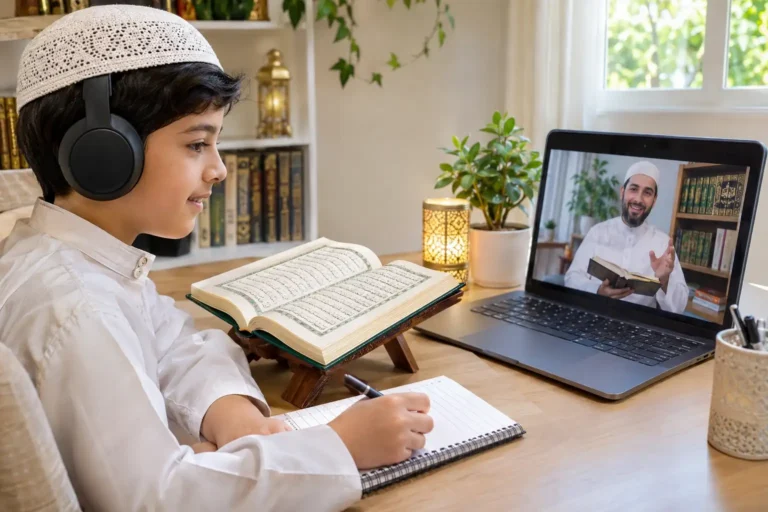
Still, a committed Quran teacher pushes forward. They adapt. They use technology wisely. They teach online with the same sincerity scholars taught in person centuries ago. The challenges are real, but so is the reward. Our certified online Quran teachers are trained to guide students through it all with patience and dedication.
Frequently Asked Questions
What is a teacher’s responsibility in Islamic education?
A Quran teacher is a qualified person in Islam who transmits knowledge, builds character, and leads the students spiritually. In their actions, they follow the prophetic model and serve as a living example of Islamic values in everyday life.
Why is the teacher so highly respected in Islam?
Islam considers teachers as inheritors of the prophets. They are the bearers of divine knowledge. Allah elevates those who know, and those who teach sincerely are rewarded greatly in this world and the hereafter.
What qualities must an Islamic teacher have?
The Islamic teacher should be sincere, patient, kind, and decent. They are responsible for teaching at the learner’s level, for caring for individual learners, and for being consistent in their actions in everyday life.
Can children learn Quran online with a qualified teacher?
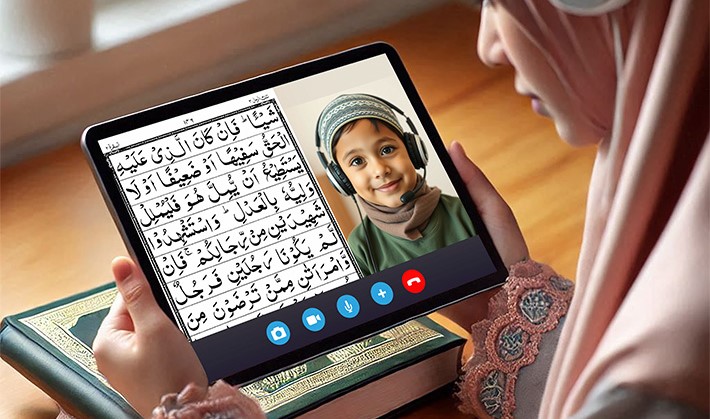
Yes. Students are now able to find certified Quran teachers from all over the world via online platforms. One-on-one live classes enable children to learn at their own pace, with Tajweed correction and personal attention during the lessons.