
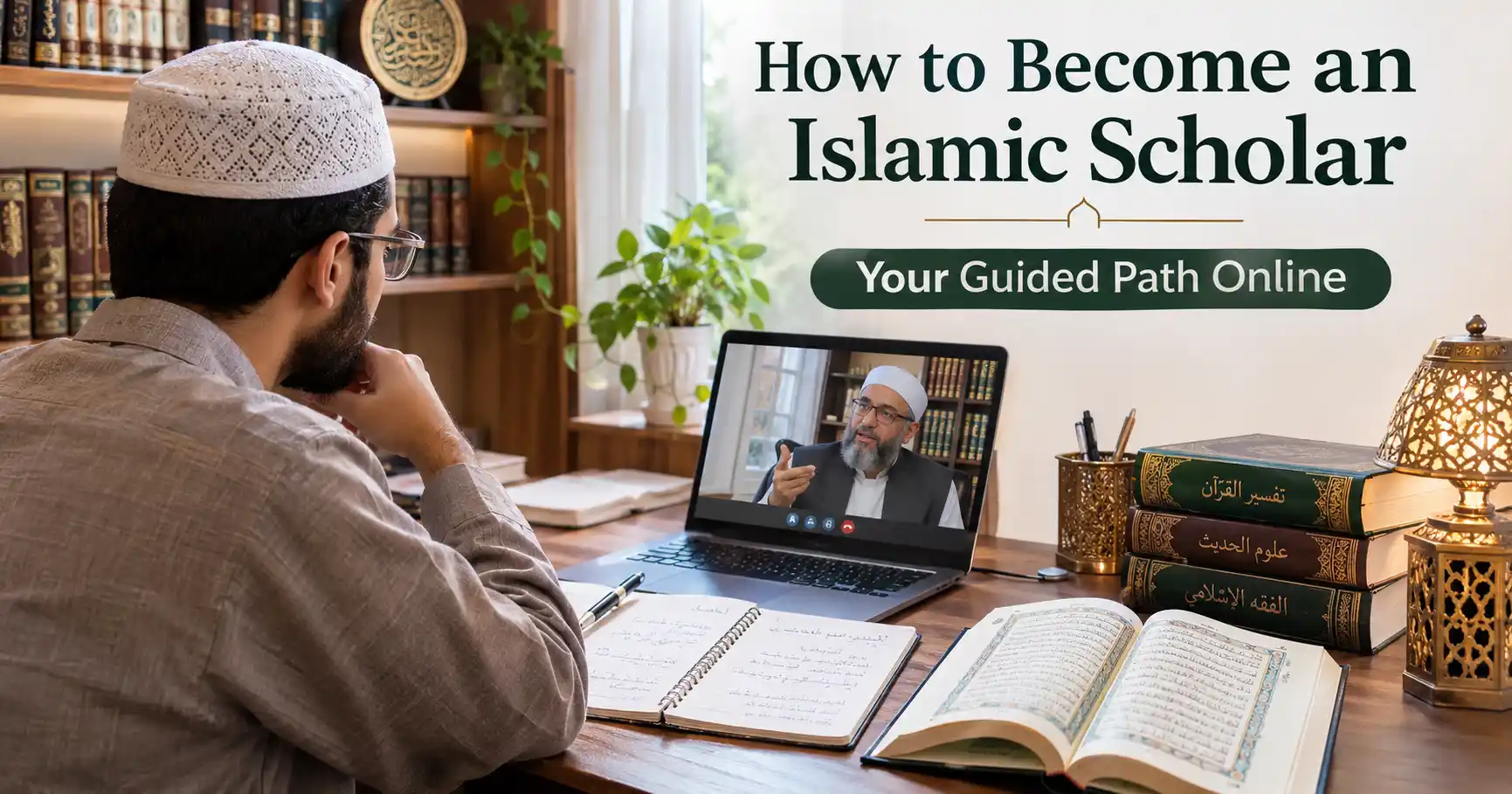
How to Become an Islamic Scholar: Your Guided Path Online
Wondering how to become an Islamic scholar? It takes many years of guided study in Arabic, Quran, Hadith, Fiqh and Aqeedah, sitting with qualified teachers whose sanad reaches the Prophet through an unbroken, verified chain.
That solid foundation never begins with advanced books. It begins with correct pronunciation, daily Quran reading practice and a sincere intention, the stage where adults, sisters and children start Islamic studies online with Knowledge Quran.
What It Truly Takes to Become a Qualified Islamic Scholar
Scholarship has levels, and naming them clears confusion. Every talib al-ilm starts humbly as a student of knowledge, may graduate as an Aalim or Alimah, then specialize further as a Mufassir, Muhaddith, Faqih or Mufti.
Imam Ash-Shafi’i named six conditions: intelligence, passion for knowledge, perseverance, sustenance, guidance of a teacher and long years. A degree never appears. In our classrooms, adab before ilm still separates serious students from certificate collectors.
Your Step-by-Step Roadmap From Quran Reading to Scholarship
Before any syllabus comes niyyah: seek knowledge to please Allah, never for fame, debates or social status. Fard ayn follows, the personally obligatory knowledge every Muslim owes, while scholarship remains fard kifayah, a communal trust.
Quran Reading, Tajweed and Hifz
Scholars who rush this stage struggle later. Noorani Qaida builds Arabic letters, Makharij sharpen articulation, and proper Tajweed guards the words of Allah. Hifz follows, protected by regular revision, the muraja’ah every qualified teacher demands.
Arabic Grammar, Nahw and Sarf
Translations open doors, but original texts demand mastering Arabic. Build vocabulary and sentence structure first, then Nahw, Sarf and finally Balagha for rhetoric. Many adult students learn Quranic Arabic online before opening classical Islamic books.
Tafseer, Hadith and Seerah
Tafseer turns recitation into understanding. Begin with simple and authentic Tafsir books, then Tafsir Ibn Kathir and Tafsir al-Jalalayn, studying Asbab al-Nuzul (reasons behind the revelation) plus important Arabic terms shaping Islamic rulings in verses.
Hadith study adds Sahih al-Bukhari, Sahih Muslim and Mustalah al-Hadith, where chains of narration and reliability of narrators decide Hadith accuracy. Seerah grounds everything in the life of the Prophet, his mercy, justice and leadership.
Fiqh, Aqeedah and Usul Sciences
Aqeedah comes first: belief in Allah, His Angels, Divine Books, His Prophets, the Hereafter and Divine Decree. Fiqh then covers purification, Wudu, Salah, Zakat, marriage and financial dealings, studied within one Madhab for real clarity.
Here most guides stop, yet scholarship starts. Principles of jurisprudence (Usul al-Fiqh) and Usul al-Tafseer explain how rulings are derived, not merely what they are. Without these related sciences, students repeat answers but cannot reason.
Choosing a Qualified Teacher, Sanad and Study Pathway
Self-study feels efficient until mistakes compound. A teacher catches errors you cannot hear, explains difficult topics with wisdom and discipline, and keeps you learning directly from experienced teachers, how Sacred Knowledge traveled for fourteen centuries.
Darul Uloom, University or Online
Three routes dominate today: Dar al-Uloom seminaries, Islamic universities and online study. Each suits a different life stage, so compare format, duration and fit honestly, because the wrong pathway costs more years than any subject.
How to Verify Sanad and Ijazah
Ask three questions: who taught you, what did you complete, and may I see your Ijazah certificate? A sanad names every teacher back to the Prophet; that chain is what an Ijazah in Quran means.
Sheikh Hamza Yusuf and Mufti Ismail Menk inspire millions, yet listening is not studying. YouTube breeds confidence without correction, and to pronounce rulings without proper knowledge is sinful, likened by Imam Ibn al-Qayyim to shirk.
How Long Scholarship Takes for Adults, Sisters and Reverts
Full-time students commonly need six to eight years, while part-time learners take longer. Starting at thirty or forty is normal; working professionals and reverts progress steadily when consistency, patience and correct guidance replace rushed ambition.
| Stage | Typical Duration | What You Study |
| Foundation | 1–2 years | Quran reading, Tajweed, basic Arabic, fard ayn |
| Intermediate | 2–3 years | Nahw, Sarf, Fiqh, Aqeedah, Hadith, Tafsir |
| Advanced | 3–4+ years | Usul sciences, classical Islamic texts, Ijazah, specialization |
Sisters walk the Alimah path with equal depth, following a tradition including Aisha (RA). Many families prefer qualified female instructors, so our qualified female Quran teachers teach sisters privately, from first letters to fluent recitation.
Build Your Scholarly Foundation With One-to-One Classes
No academy hands you scholarship in a term, and honest ones admit it. Knowledge Quran builds the foundation stage: a matched tutor, flexibility in timings, monthly assessments, a structured path and certificates as courses conclude.
One-to-One Quran and Hifz Lessons
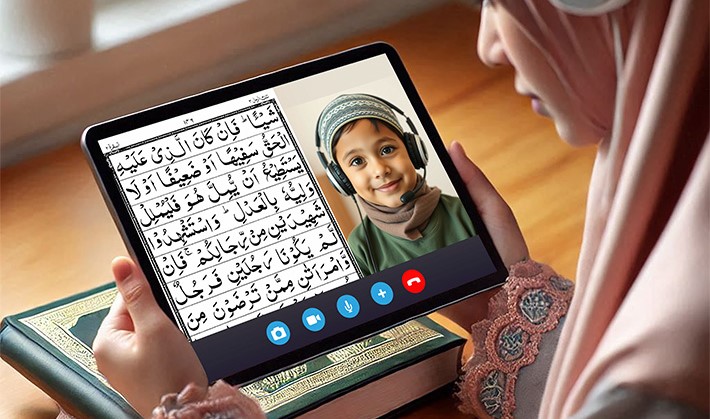
Beginners start with Noorani Qaida and basic Tajweed rules, then move into Quranic memorization with a daily memorization target, revise old lessons each session, and keep reading with a teacher who corrects every slip live.
Quranic Arabic and Tafseer Courses
Once recitation is steady, our Quran Translation classes unpack Quranic meanings word by word, and the online Tafseer course adds moral and spiritual guidance from each Surah, the natural bridge toward deeper Islamic sciences later.
Begin Your Journey Toward Islamic Scholarship Today
Every Islamic scholar you admire once sat beside a teacher and opened Noorani Qaida. Book a free trial class, meet your matched qualified teacher, and start building your scholarly foundation with Knowledge Quran this week.
Frequently Asked Questions
How Many Years Does It Take to Become an Islamic Scholar?
Most full-time students need six to eight years to graduate as an alim, often through Dars-e-Nizami. Part-time regular learning takes longer, while becoming a Mufti requires further ifta training, usually one or two additional years.
Can I Become an Islamic Scholar by Studying Online?
Yes, partly. Online classes build the Quran, Tajweed, Arabic and Tafsir foundation efficiently, but classical Islamic texts and Ijazah still need close supervision from qualified scholars holding a verified sanad, whether online or in person.
Can Women Become Islamic Scholars?
Absolutely. Women have narrated, taught and preserved Sacred Knowledge since the Prophet’s era. Today the alima course mirrors the alim syllabus, and many sisters choose qualified female instructors for one-to-one study at their own pace.
Do I Need to Memorize the Whole Quran to Become a Scholar?
Not strictly. Full Hifz is highly valued, and many scholars finished it early in life, yet it is not universally required. Starting with online Quran memorization of key Surahs builds Arabic vocabulary and lasting focus.
What Is the Difference Between an Alim and a Mufti?
An alim has completed broad training across Fiqh, Hadith, Tafsir and Arabic grammar. A Mufti adds specialized ifta study and is authorized to issue fatwas, applying principles of jurisprudence to real questions people actually ask.



One Comment
Comments are closed.