Why Tafseer Matters: Understanding the Quran the Right Way
Over 1.8 billion Muslims recite the Quran every single day. That is nearly a quarter of the entire world reading words that most of them do not fully understand. There is something deeply humbling about that reality.
What is Tafseer? Simply put, it is the scholarly discipline that explains the true meaning behind the Quran’s verses, a science that some of the sharpest minds in Islamic history spent their entire lives carefully building and refining.
Many people assume a good translation is all they need to connect with the Quran. However, that assumption leaves an enormous amount on the table.
The gap between reading the Quran and truly understanding it is wider than most people ever pause to consider. So what does it actually take to reach that deeper level of understanding?
What Does Tafseer Actually Mean?
The Arabic root f-s-r means to uncover something hidden in plain sight. At its core, Tafseer is the scholarly explanation of the Quran’s verses, looking closely at their language, their historical setting, and the wisdom they carry for real everyday life.
Think about it this way. The Quran was revealed in 7th century Arabia, a world that spoke, lived, and thought in ways that feel genuinely distant from modern life. No shared culture. No shared idioms.
No shared frame of reference. A person opening the Quran today without proper scholarly guidance is essentially trying to cross a 1,400 year gap with no bridge in sight. Tafseer builds that bridge.
Why Tafseer Is Not the Same as Translation
This is the most common misconception in Quranic study. A translation puts Arabic words into another language and stops there.
Tafseer asks why a verse was revealed, what the Arabic phrasing implies in full, and how the Prophet ﷺ and his companions actually applied it in life. Take the word salah. Every translation writes “prayer” and moves on.
Tafseer spends considerable time unpacking its conditions, spiritual depth, and scholarly discussions around it. That is not a small difference. It is the difference between reading a menu and truly understanding how the food was made.
Establishing a strong recitation foundation makes Tafseer study far more rewarding from the start. Learn Quran with Tajweed is where that foundation genuinely begins.
The Three Major Types of Tafseer
Scholars developed three well-established approaches to interpreting the Quran across many centuries. Tafseer bil-Ma’thur is the oldest and most authoritative, letting the Quran explain itself through Hadith and the companions’ direct explanations.
Tafseer bil-Ra’y applies independent scholarly reasoning within proper Islamic boundaries, valuable when done carefully and dangerous when done carelessly.
Tafseer al-Ishari, largely associated with Sufi scholarship, draws out the inner spiritual dimensions of verses without abandoning their outward meaning.
Most classical scholars drew from all three in their major works because these methodologies always complemented rather than competed with each other.
Famous Books of Tafseer Every Muslim Should Know
Some of the greatest minds in Islamic history gave their entire lives to writing Tafseer. Tafseer Ibn Katheer remains the most widely read today, trusted for its narration-based reliability across centuries.
Tafseer al-Tabari is one of the most comprehensive scholarly works ever produced in Islamic history. Tafseer al-Jalalayn stays concise without sacrificing depth, which is exactly why traditional institutions still teach it.
Tafseer al-Sa’di is modern, clear, and genuinely accessible for beginners who find the discipline overwhelming at first. These are not simply books. They are the intellectual inheritance of an entire civilization.
Children beginning their Islamic journey early deserve a foundation built with real care. Basic Islam for Kids offers exactly that kind of grounded and thoughtful start.
Who Can Write or Teach Tafseer?
Very few people genuinely qualify. Classical scholarship set strict conditions for a Mufassir, the scholar who performs Tafseer.
Mastery of Arabic linguistic sciences, deep Hadith knowledge, and a comprehensive understanding of Islamic jurisprudence are all required without exception. This is not gatekeeping.
It is an honest recognition that misinterpreting the word of Allah, even with good intentions, carries serious consequences. Scholars throughout history treated Tafseer as a sacred trust and spent years preparing before ever attempting it.
Learning Tafseer: Where Does One Begin?
Jumping straight into Tafseer without preparation almost always leads to confusion. The path scholars have always recommended starts with Quranic recitation, then basic Arabic grammar, then beginner-friendly texts like Tafseer al-Sa’di or Tafseer al-Jalalayn.
A qualified teacher changes the experience entirely because the right guidance at the right moment saves months of unnecessary frustration.
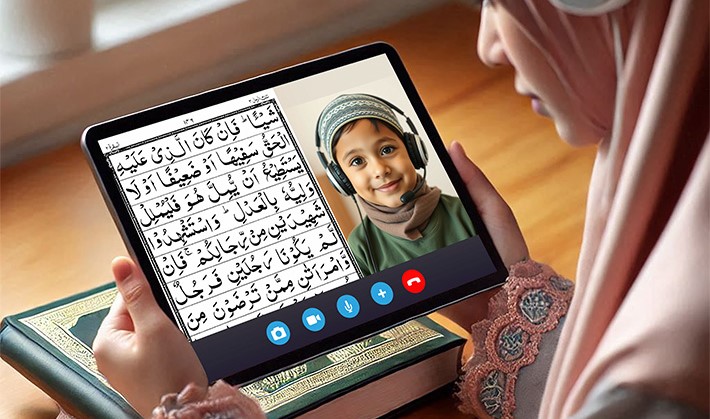
Structured online learning has made this journey genuinely accessible for students living far from traditional Islamic institutions. Building strong Arabic phonetics through Learn Noorani Qaida gives beginners the confidence they need before moving deeper into Quranic study.
Why Tafseer Still Matters Today
Social media made sharing a Quranic verse effortless. It made sharing the full context behind it far less common. Verses get quoted in arguments and debates, stripped of everything that gives them real meaning.
Tafseer trains the mind to slow down, ask why, and seek the full picture before concluding. And personally, reciting a verse while truly understanding its history and wisdom feels entirely different.
It stops feeling like routine and starts feeling like a genuine conversation with the words of Allah.
Explore structured Quranic courses at Knowledge Quran and begin the kind of Quranic study that genuinely stays with a person for life.
FAQs
What is Tafseer in simple words?
Tafseer is the scholarly explanation of the Quran’s verses and deeper meaning. It reveals context and divine guidance that translation alone cannot capture.
Is Tafseer the same as translation?
Not at all. Translation converts words into another language while Tafseer explains the full intent and historical depth sitting behind those words.
Can anyone do Tafseer of the Quran?
Responsible Tafseer requires deep expertise in Arabic, Hadith, and the Islamic sciences. Interpreting without that preparation risks seriously misrepresenting the Quran’s true message.
What is the most famous book of Tafseer?
Tafseer Ibn Katheer holds that position comfortably. It remains one of the most trusted scholarly references across the Muslim world today.